Greensboro began enforcing its Stage 2 water restrictions on Monday, Nov. 9. If your home is on City water, sprinklers now run one day a week, on your City garbage collection day. The rule took effect Nov. 3, and the city gave customers a week to adjust before enforcement began.
The reason is in northern Guilford County. At 7 a.m. on Nov. 9, Lake Townsend was 84.1 inches below full. That's about 7 feet, and roughly three times Lake Brandt's drop of 28 inches. The city is also already buying millions of gallons a day from outside suppliers. The once-a-week sprinkler rule is the part a household sees of a water system that's already leaning on its neighbors.
Two Lakes, Two Different Drops
Greensboro gets its water from three lakes, all in a protected watershed in northern Guilford County: Lake Townsend, Lake Brandt and Lake Higgins. When full, they hold about eight billion gallons. Each lake has its own job. Water from Lake Brandt is treated at the Mitchell Water Treatment Plant. Water from Lake Townsend goes to the Townsend Water Treatment Plant. Lake Higgins mainly refills Lake Brandt as needed.
The two lakes look very different right now. On Nov. 9, Lake Townsend was down 84.1 inches, while Lake Brandt, which Lake Higgins keeps topped up, was down 28. Neither lake got any rain in the 24 hours before that morning's reading.
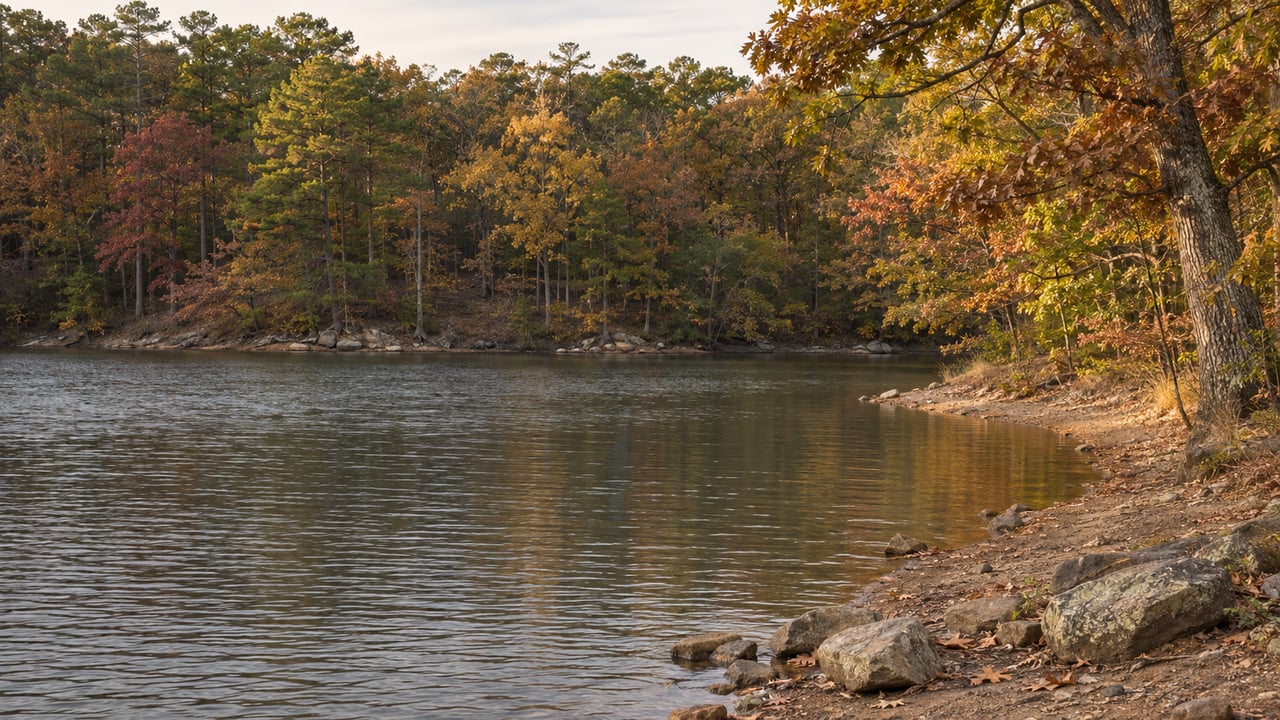
The drop is easy to see from the shore. When the restrictions took effect, FOX8 talked with people walking the Lake Townsend trail, who said the low water put the drought in perspective. Greensboro resident David Hoover was walking it with his daughter and told the station, "We definitely need the rain and don't realize how important it is until you stumble upon it, drive by it, etc."
The city says these lake levels are similar to the 2007 to 2008 drought. The U.S. Drought Monitor puts most of North Carolina's counties, Guilford included, in severe drought. The city also says warm spring and summer weather lowered the streams that refill the lakes.
Water That Comes From Other Cities
The three lakes aren't Greensboro's only source. On Nov. 8, the city bought this much water from its partners:
- Piedmont Triad Regional Water Authority: 9.21 million gallons per day
- City of Burlington: 2 million gallons per day
- City of Reidsville: 1.01 million gallons per day
That adds up to just over 12 million gallons a day. Public water demand for Nov. 9 was 29.3 million gallons, so purchased water covers a large share of what the city uses in a day.
The biggest of those sources took decades to build. The Water Authority's supply comes from Randleman Lake, a project first proposed in the 1930s. It moved forward after six regional governments formed the authority in the late 1980s. The dam was finished in 2004, and Greensboro started receiving treated water on Oct. 4, 2010. Greensboro pays 53.1 percent of the project's cost and will receive up to 25.5 million gallons a day once all expansions are complete. The city's page lists those purchases, along with water from Burlington and Reidsville, as its backup during drought.
Greensboro's suppliers are dealing with the same dry weather. FOX8 reported in October that Burlington and Winston-Salem started voluntary conservation on July 7. Reidsville leaders voted for voluntary restrictions the same day Greensboro started its Stage 1, Oct. 14. The North Carolina Drought Management Advisory Council listed Alamance County, Burlington's home county, in severe drought as of Nov. 3.
What Stage 2 Asks of a Greensboro Yard
The city's Water Status Update page sets out the residential rules:
- Sprinklers, manual or automatic, run one day a week, on your City garbage collection day. If you don't have City garbage service or have more than one pickup day, your day is Wednesday.
- Hand-held hoses and watering cans are allowed any day, at any time.
- Drip irrigation is allowed any day, but only for plants, shrubs and trees. It can't be used on turf or grass. The plan defines drip as a system that doesn't spray into the air.
- Private wells. Irrigation from a private well or other non-City source is exempt. A property that has City water and also irrigates from a well must display a City-issued exemption sign. The free sign is requested through the GSO WaterWise Stage II Restriction Request form. Putting up the sign without a qualifying water source is itself a violation.
The same rules cover businesses and apartment communities. Golf courses and institutional playing fields can water only between 10 p.m. and 5 a.m., and they must cut use by 40 percent from the same billing period a year earlier. Nurseries and plant retailers can water their stock at any time.
Under the city's Water Shortage Response Plan, a residential Stage 2 violation brings "a warning for the first offense; a civil penalty in the amount of one hundred dollars ($100.00) for the second offense; a civil penalty in the amount of two hundred dollars ($200.00) for the third and successive offenses." Non-residential customers face $200 for a first violation and $500 for a second, rising to $1,000.
Some yards will feel the rule more than others. WXII spoke with Jaime Mariano, director of landscaping and maintenance at GLS Landscaping. He said new installations of grass and plants are hit hardest because they haven't stored up water yet. He also told the station the once-weekly limit could discolor turf. Water Resources Director Michael Borchers told WXII that the city has enough water, adding, "We just need to conserve and be good stewards of what we have left."
How Close Stage 3 Is
On Nov. 9, the city's daily status page showed this:
| Measure on Nov. 9, 2026 | Share of accessible storage |
|---|---|
| Total accessible system storage | 57% |
| Stage 1 trigger | 60.8% |
| Stage 2 trigger | 57.8% |
| Stage 3 trigger | 51.3% |
Storage was already below the Stage 2 trigger, with about six percentage points left before the Stage 3 trigger. The plan says each stage lasts at least 30 days and has no automatic end date. That puts Stage 2 in place until at least early December. The city can move to the next stage sooner if conditions call for it.
Stage 3 would end the weekly sprinkler day. Lawns, gardens, shrubs, trees and flowers could be watered only by hand-held hose, container or drip irrigation. The plan also bans vehicle washing and washing exterior surfaces, both with stated exceptions, along with ornamental fountains, pools and ponds. Restaurants would serve drinking water only when a customer asks for it. Stage 3 has no warnings for residential violations. Fines start at $100 for a first offense and go to $200 after that.
Demand is already lower. Public use was 29.3 million gallons on Nov. 9, compared with 32.7 million on the same day a year earlier. Based on historical information, the city says it hopes to see about a 10 percent drop in use under Stage 2. The city plans to keep flushing water mains during the restrictions to remove sediment and protect water quality, so you may still see hydrant crews in your neighborhood.
Where to Check the Daily Numbers
The figures in this post are from the morning of Nov. 9, and they change daily. The city publishes them on three pages:
- Water Demand and Lake Levels shows the 7 a.m. readings for Lake Brandt and Lake Townsend, the past day's rainfall, and demand compared with a year earlier.
- Water Status Update shows total storage, the stage triggers, and the previous day's purchases from the Water Authority, Burlington and Reidsville.
- GSO WaterWise sends leak alerts, tracks your household's daily use, and sends notices when restrictions change.
For help with the 40 percent reduction rule, or questions about a specific property, the City's Contact Center is at 336-373-2489.
This post is general information about the city's published rules, not legal advice. Check how they apply to your property with the City of Greensboro directly.
If a dry lawn or a new well sign has come up while you're planning to sell, buy or settle into a Greensboro home this winter, our family team is glad to talk it through with you. Reach out to Headen Homes. Let's Take the Next Step.